

Event Date
About the Event
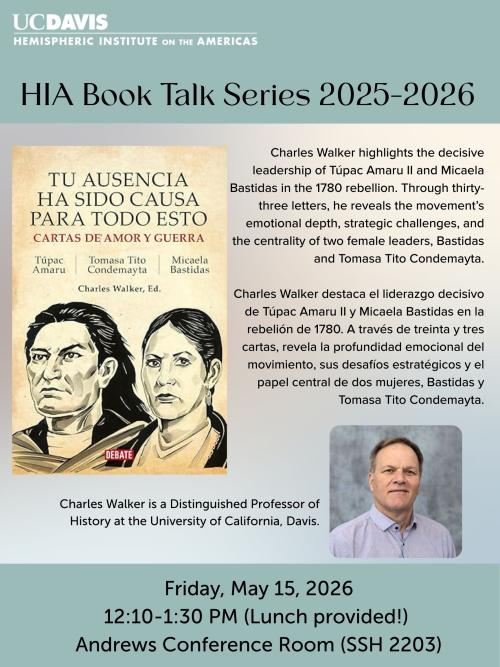
Charles Walker revela el papel crucial de Túpac Amaru y Micaela Bastidas en la rebelión de 1780, destacando su liderazgo y la dimensión humana detrás del movimiento.
"Tu ausencia ha sido causa para todo esto", le escribe Micaela Bastidas a Túpac Amaru en diciembre de 1780, cuando el líder de la masiva rebelión contra el dominio español estaba internado en las alturas del sur en lugar de aproximarse al Cusco para sitiarlo. Estas misivas entre ellos, y algunas de su colaboradora Tomasa Tito Condemayta, escritas entre fines de 1780 y comienzos de 1781, son cartas de frustración por los peligros que vivían, pero también documentos profundamente conmovedores donde José Gabriel y Micaela despliegan un cariño impactante, sin dejar de preocuparse por la seguridad de los suyos y la logística del movimiento rebelde.
Luego de un meticuloso trabajo de compilación, que incluye la reproducción de parte del material original para este libro, el historiador Charles Walker, uno de los mayores expertos en Túpac Amaru, nos presenta una selección de treinta y tres cartas fundamentales para entender, desde el género epistolar, a los rebeldes, sus afectos, los actores en juego, los miedos y las traiciones, y, también, el rol fundamental de Bastidas en la organización estratégica de la campaña, pocas semanas antes de sus célebres capturas y ejecuciones.
Charles Walker reveals the crucial role of Túpac Amaru and Micaela Bastidas in the rebellion of 1780, highlighting their leadership and the human dimension behind the movement.
"Your absence has been the cause of all this," Micaela Bastidas wrote to Túpac Amaru in December 1780, when the leader of the massive rebellion against Spanish rule was interned in the southern heights instead of approaching Cusco to besiege it. These letters between them, and some from their collaborator Tomasa Tito Condemayta, written between the end of 1780 and the beginning of 1781, are letters of frustration due to the dangers they experienced, but also deeply moving documents in which José Gabriel and Micaela display a striking affection, while continuing to worry about the safety of their loved ones and the logistics of the rebel movement.
After a meticulous compilation work, which includes the reproduction of part of the original material for this book, the historian Charles Walker, one of the greatest experts on Túpac Amaru, presents us with a selection of thirty-three fundamental letters to understand, from the epistolary genre, the rebels, their affections, the actors at play, the fears and betrayals, and, also, the fundamental role of Bastidas in the strategic organization of the campaign, a few weeks before his famous captures and executions.
About the Author
Charles Walker is Professor of History. He directed the Hemispheric Institute on the Americas at UC Davis for over a decade and was also the director of Global Centers for Latin America & the Caribbean (Global Affairs). He held the MacArthur Foundation Endowed Chair in International Human Rights from 2015-2020. He has published widely on Peruvian history, truth commissions, and historiography, in English and Spanish. His 2014 Harvard University Press book, The Tupac Amaru Rebellion, was named one of the best books of the year by the Financial Times and also won the Hundley Prize from the Pacific Coast Branch of the American Historical Association. His Witness to the Age of Revolution has won awards in the United States and Peru and has been translated into Spanish and Quechua.
In 2025, he published Tu ausencia ha sido causa para todo esto: Cartas de amor y guerra. Túpac Amaru / Micaela Bastidas / Tomasa Tito Condemayta (Penguin PERU) and Ensayos Cusqueños: Política, Sociedad y Disidencia desde Túpac Amaru (Cusco, Centro Bartolomé de Las Casas). In December, Brill published the English version of his book with Carlos Aguirre, Alberto Flores Galindo: Utopia, History and Revolution.